Learning and understanding partner dance through motion analysis in a virtual environment
Doctoral thesis, University of Geneva, 2020
A framework for describing partner dance through measurable motion features and applying them to virtual learning systems.
BibTeX +
@phdthesis{Senecal2020Thesis,
  author = {Senecal, Simon},
  title = {Learning and understanding partner dance through motion analysis in a virtual environment},
  school = {University of Geneva},
  year = {2020},
  doi = {10.13097/archive-ouverte/unige:142477},
  url = {https://archive-ouverte.unige.ch/unige:142477}
}
Abstract +

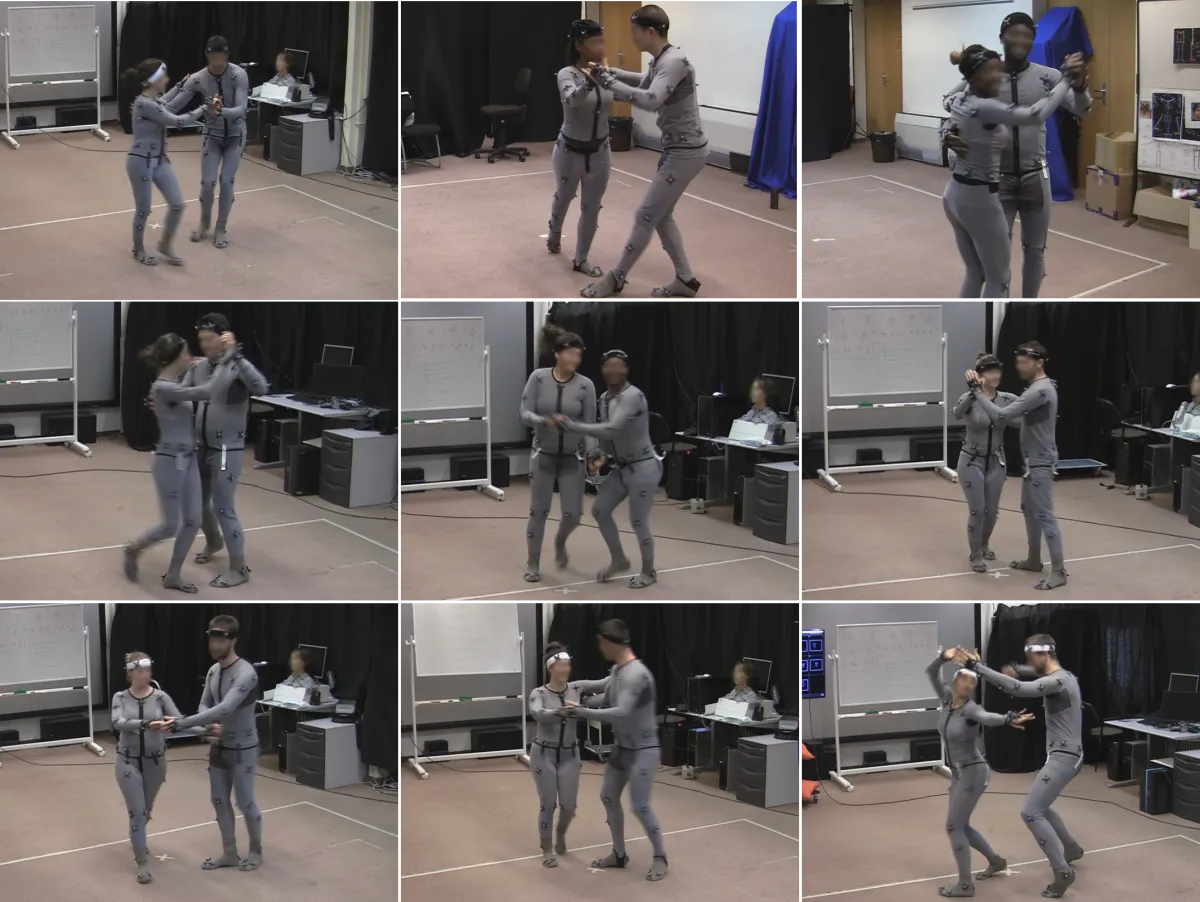
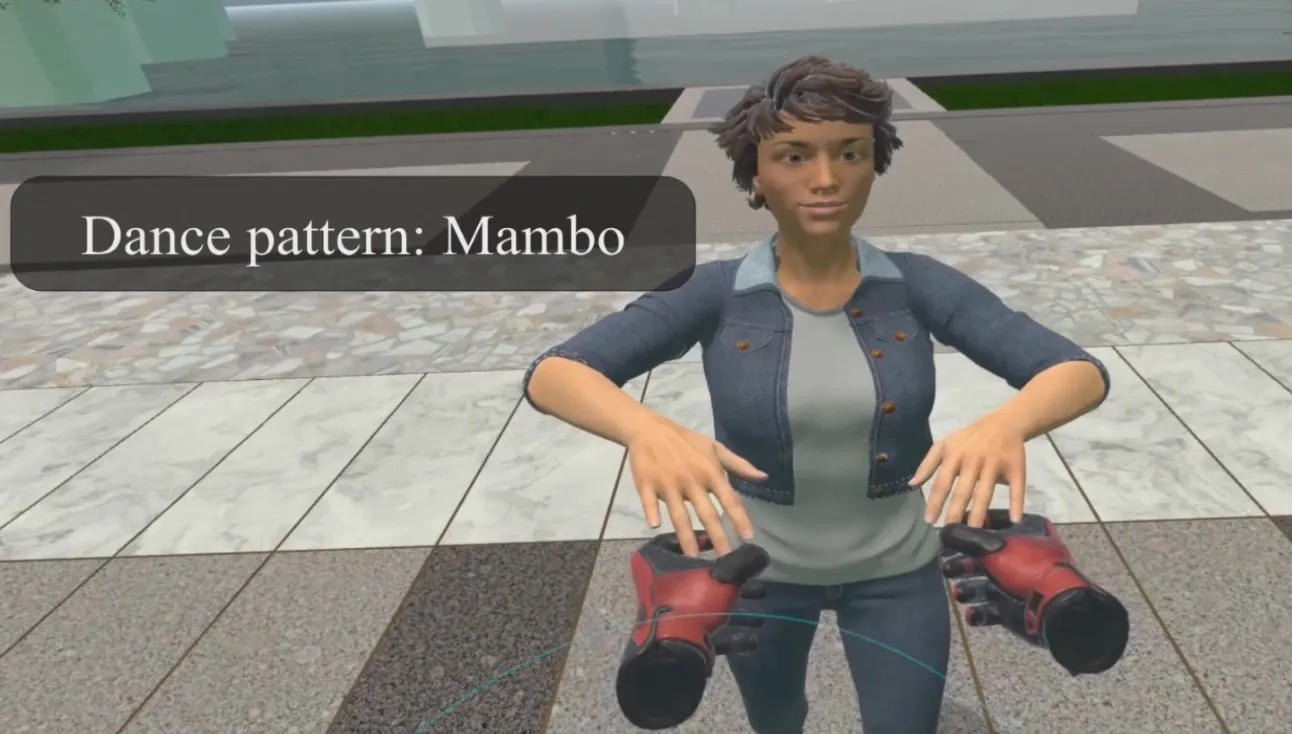
Partner dance is a physical activity that is social and involves two partners dancing to music. Learning such dance is difficult and presents many challenges, such as finding a partner and learning the right skills. Through the motion analysis of couples as entities with regards to tempos, we aim at developing new ways to understand and characterize partner dance. We propose a set of features that can extract high-level information from low-level data and help design learning systems. First, we selected three main dance skills considered important for Salsa dance learning from interviews with experts - Rhythm, Guidance, and Styling - and searched for clues in the theoretical description of movement that could describe high-level dance skills through low-level motion measurements. We then suggest a set of musical-related motion features to characterize Salsa performance in terms of learning levels. Second, a database was created with 26 couples from three levels of experience performing to ten songs with varying tempos. The extracted features were submitted to machine-learning algorithms, with Random Forest achieving up to 90% accuracy for level classification. Finally, we designed and evaluated an interactive virtual-reality dance-learning system with a virtual partner and hand-to-hand interaction. Motion analysis using the proposed features and Laban Movement Analysis showed improved dance skills after training. Overall, the approach is relevant both for classifying learning states and improving dance skills in an immersive virtual-reality environment.